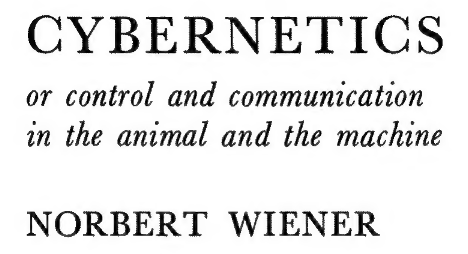
2) 1947! 1948 CYBERNETICS = Control Communication in Animal AND Machine
NORBERT WIENER
Cybernetics, from the Greek [word for] steersman …"CONTROLLING SHIP)
Refers to the fact that the steering engines of a ship are indeed one of the earliest and best developed forms of feed-back mechanisms.
One good way of obtaining a historical overview of a discipline is to review a summary outline of its evolution.


The word's cyborg, cyberspace, and cyberpunk describe concepts from the work of
one of The Massachusetts Institute of Technology, MIT’s legendary professors,
Norbert Wiener landmark publication, 1948 Cybernetics, PDF described a new theory of
1) Control, 2) Feedback and 3) Communication in biological and electromechanical systems.
LIKE ELECTRONIC VICTIMS CONTROL AND VOICE COMMUNICATION WITH V2K AND RNM
HE SAYS "THE TERM CYBERNETICS DOES NOT DATE FURTHER BACK THAN THE SUMMER OF 1947"
HOW INTERESTING - CYBERNETICS ID FOLLOWS 1947 ROSWELL AND ALIEN UFO'S!
WITH ALIEN GIFTED DIRECTLY / REVERSE ENGINEERED PRODUCTS,
INCLUDING COMPUTERS AND USAF 1947 TRANSISTORS! NOW NANO IN SIZE
WE NOW HAVE ALIEN / HYBRID / HUBRID (WALKING AMONG US!) CELLULAR AND SYNTHETIC, TELEPATHY
Judges say Targeted Individuals are a "National Security" & invoke this 1947 NS Act! COVER UP!
MJ12 / CIA / NSA/ USAF ALL SUDDENLY CREATED IN 1947 > NOW USSP US SPACE FORCE
CONTROL GPS AND TARGETING OF CYBORGS LOCATIONS WORLDWIDE.
NOW WITH JUST DNA, PEOPLE ARE BEING ELECTRONICALLY AND WIRELESSLY CONNECTED
KNOWN AS TARGETED INDIVIDUAL (TI'S). WHEN VICTIMS ARE IN FACT CYBORGS!
CYBERNETICS IS CONTROL FEEDBACK AND COMMUNICATIONS OF BIOLOGICAL ANIMALS AND HUMANS,
WITH ELECTRONICS, MACHINES, COMPUTERS, SATELLITES AND CELL TOWERS!
MIND CONTROL HAS CHANGED WHO IS IN CHARGE!
FREE PDF BOOK

TEACH THIS TO THE MEDICAL INDUSTRY
STILL LIVING IN MEDIEVAL TIMES!
TODAY 2025 WE ARE PRODUCING
COMPUTERS WITH NEURONS!
"The brain and the computing
machine have much in common"
"May suggest new and valid approaches to psychopathology and even to psychiatric's."
STATED IN 1948!
AS OVER 6 MILLION PEOPLE ARE
TARGETED TORTURED V2K RNM
VIA ELECTRONIC'S WIRELESSLY CONNECTED FORCING
TARGETED INDIVIDUAL (TI) VICTIMS, TO BE CYBORGS!


PAGE 11/ 12
We have decided to call the entire field of control and communication theory, whether in the machine or in the animal, by the name Cybernetics, which we form from the Greek xvBepviras or steersman.
In choosing this term, we wish to recognize that the first significant paper on feedback mechanisms is an article on governors, which was published by Clerk Maxwell in 1868,
and that governor is derived from a Latin corruption of xyvfepwjrgs. We also wish to refer to the fact that the steering engines of a ship are indeed one of the earliest and best-developed forms of feedback mechanisms.
Although the term cybernetics does not date further back than the summer of 1947, we shall find it convenient to use in referring to earlier epochs of the development of the field.
History Of Cybernetics
Aside from control, the other fundamental concept of cybernetics is communication.
It may be remarked that after the death of Stalin, cybernetics—which had previously been considered a bourgeois theory aimed at enslaving the people—
became very popular in Russian academic circles
A. M. Ampère who introduced the word cybernétique as well as B. Trentowski who did the same in Polish. H. Schmidt, S. Odobleja in the 1930s
The basic concepts of cybernetics are negative feedback and information. A famous example of negative feedback is given by Watt’s governor,
the purpose of which is to maintain the speed of the wheel of a steam engine, at a given value, despite perturbations.
The theory of information, mainly due to Claude E. Shannon, gives a measure of the unexpectedness of a message carried by a signal.
“Second order cybernetics” emphasizes the role of observation played by a
cybernetic device, which has to perceive in order to adjust its behavior to its aims.
The word cybernetics had been chosen by Wiener, in agreement with other colleagues, from the Ancient Greek kubernetike, or the art of steering.
It may be of interest to note that J. von Neumann (MJ12! ROSWELL TRANSISTORS, RAYTHEON RADIO VALVES RADAR COOKERS AND WEAPON SYSTEMS!)
Also had contact with Wiener and McCulloch, mainly in a group sponsored by the Macy Foundation called the Teleological Society,
or informally the “Cybernetic Club”, to which H. von Förster also contributed.
Other associations also devoted to cybernetics included the Cercle d’Etudes Cybernétiques in France, and the Ratio Club in Great Britain.
https://link.springer.com/rwe/10.1007/978-3-319-49425-8_274
First Order Cybernetics
“cybernetics is the biggest bite out of the fruit of the Tree of Knowledge that mankind has taken in the last 2000 years”

Maruyama, M. (1963). The second cybernetics: Deviation-amplifying mutual causative processes. American Scientist, 51, 164–179.
AMERICAN SOCIETY FOR CYBERNETICS FOUNDATIONS
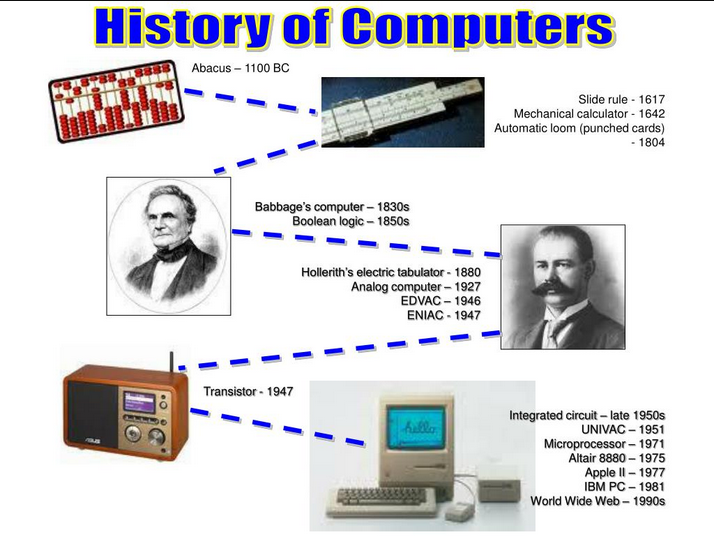
History of Cybernetics, A Timeline for the Evolution of Cybernetics,
One good way of obtaining a historical overview of a discipline is to review a summary outline of its evolution. This page offers a summary timeline of events relevant to cybernetics.
PREHISTORY: Setting the Stage for the Coalescence of Cybernetics
5th Century BC
The term kybernetike employed for the first (recorded) time. In The Republic", Plato invokes the word to connote 'an art of navigation'
In the course of comparing steering a ship with steering (i.e., governing) a community.
To judge from the records, it is Aristotle who originates the phrase 'The whole is more than the sum of its parts',
Descartes argues for separation of body and soul in Passions of the Soul (1649)
MENTAL CONCEPT OF MAN AND MACHINE GO BACK 275 YEARS! > AT LEAST TO 1747
(KIDS LEARN AT SCHOOL IN BIOLOGY CLASS - FROG ELECTRICAL STIMULATION)
Luigi Galvani's experiments demonstrate electrical stimulation as an impetus for muscle reflex (1786) (240 YEARS AGO)
Julien Offray de La Mettrie explains mental activity as wholly explainable via physiology Histoire naturelle de l'âme (Natural History of the Soul) (1745),
then proceeds to explain physiology in purely mechanistic terms in his L'homme machine (Man a Machine). (1747)
Joseph Jacquard invents a loom controlled by reconfigurable cards - the first programmable production machine (1801)
Baron Cuvier introduces the use of the term l'intelligence , as opposed to reason, as a more general concept for addressing directed behavior in animals as well as humans (1822)
Charles Babbage conceives and describes his Analytical Engine (1833)
French scientist Andre-Marie Ampère invokes the term cybernétique (still the French form of the English 'cybernetics') to denote 'the art of governing' or 'politics'. (Essai sur la Philosophie des Sciences, publication dates variously given as 1834, 1838, and 1845)
George Boole presents his logical scheme. (1836)
German physiologist Johannes Müller formulates his Law of Specific Nerve Energies - associating perception with a variety of distinct neural mechanisms and pathways, and refuting the notion that external phenomena are 'received as a whole' by the perceptual system. (late 1830's)
British Astronomer Royal G.B. Airy, develops a feedback device for continuously manuevering a telescope to compensate for the earth's rotation. Problems with his mechanism led to Airy's becoming the first person to discuss instability in close-loop systems and the first to analyze them using differential equations. (1840)
Bronislaw Trentowski publishes Cybernetyka -- a vision of unified human activities guided by the transdisciplinary finesse of a manager who must be transdisciplinary owing to the inability of any single discipline to capture the range of knowledge requisite to such management. (1843)
Sidenote: Bronislaw Trentowski, with Karol Libelt, is credited for introducing the term 'intelligentsia' (1844)
Ada Byron Lovelace hypothesizes Babbage engines could 'compute' any symbols, not just numbers, and she suggests possibilities for creating graphics and complex musical forms. (1843)
The French biologist Claude Bernard introduces the idea of homeostasis as well as attention to the maintenance of constant state(s) in the body. (1855)
Darwin publishes The Origin of Species, emphasizing reciprocal interaction between individual organisms and their environment as a determining factor in speciation and evolution. (1859)
Transcontinental and transoceanic telegraphy introduces the first global communications network, with subsequent applications presaging the 20th century's Internet (1860's onward)
J. C. Maxwell applies differential equations to explain instability problems in James Watt's flyball governor (1868)
American philosopher Charles Sanders Peirce develops his 'pragmaticism', which makes knowledge contingent on experience and provides a formal basis for exploring epistemological constructivism (1860's and onward)
Peirce develops his 'phaneroscopy' (study of that which can be present to the mind) and an associated 'semiotic' (theory of signs)
which reframes cognition in terms of abstract relations (1870's and onward)
Poincaré's mathematical work is sometimes considered the genesis of modern systems dynamics. (1880's)
WWI generates a horrific number of injured soldiers, some of whose head and brain damage will be the object of scrutiny for psychologists and physiologists for decades thereafter. Some of these researchers (e.g., Kurt Goldstein) will begin to discern linkages between the nervous system and observable behaviors (1914 - 1918)
The word 'robot' first appears in the Karl Capek play R.U.R.. The word is derived from the Czech 'robota', meaning 'serf' or 'subservient labor(-er)' (1921)
Bell Laboratories undertakes application of mathematical models and techniques to analyze telephonic communications network behaviors (1920's onward)
Alfred James Lotka publishes Elements of Physical Biology (later cited as a precedent for some cybernetics principles). (1924)
Vannevar Bush and colleagues develop the first analogue computer, capable of solving differential equations. (1925)
Alan Turing specifies the abstract Turing Machine. (1936)
HISTORICAL ERA for Cybernetics, 1940S
Norbert Wiener begins working with engineer Julian Bigelow on the problems involved in effective automatic range finders for antiaircraft guns (1940)
Jakob von Uexküll publishes his book Bedeutungslehre, considered the point of origin for biosemiotics. (1940)
Benjamin Whorf publishes 3 papers in which he introduces his theses that language and culture are intimately interwoven and that language structures thought. (1940 - 1941)
The word 'robotics' first appears in the Isaac Asimov short story "Runaround". (1942) NO 'robot' first appears in the Karl Capek play R.U.R 1921!
Warren McCulloch and Walter Pitts conduct their pioneering work on neural networks (up through 1943)
Arturo Rosenblueth, Norbert Wiener, and Julian Bigelow publish their seminal article "Behavior, Purpose and Teleology" This was the published version of the topics Rosenblueth had presented in the 1942 Cerebral Inhibition meeting. It marked the first scientific publication addressing purposeful machines (1943)
Warren McCulloch and Walter Pitts publish their seminal paper "A Logical Calculus of the Ideas Immanent in Nervous Activity" (1943)
Alan Turing pursues his 'child machine' concept - using knowledge of how humans acquire intelligence to design a trainable intelligent machine or computer. (ca. 1943)
Publication of textbooks summarizing advances of the WWII era opens up a 'golden age' in engineering control theory (1945 and onward)
A diverse group including Wiener, Von Neumann, McCulloch, and Pitts meet to discuss the establishment of a new field of inquiry reflecting their common themes and interests (1945)
John von Neumann outlines the formal bases for cellular automata. (ca. 1945)
Eckert and Mauchly build the first large electronic computer (ENIAC) at the University of Pennsylvania. (1946)
John von Neumann formulates concept of a stored 'program', setting the stage for flexible programming of computers. (1946)
Kurt Goldstein publishes The Organism, correlating biology and psychology in behavior. (1946)
The first of ten Macy conferences is held under the initial title "Feedback Mechanisms and Circular Causal Systems in Biological and Social Systems". This series of conferences (actually motivated by excitement from the 1942 Cerebral Inhibition meeting) will become the birthplace of cybernetics as a field. (1946)
Norbert Wiener's first recorded public usage of the term 'cybernetics' at a Macy conference on the subject of "Feedback Mechanisms
and Circular Causal Systems in Biological and Social Systems" (1946)
Ecologist G. E. Hutchinson presents a paper entitled "Circular causal systems in ecology" at the 1946 Macy Conference,
linking ecology and the new constructs that were about to be labeled 'cybernetics'.
W. Ross Ashby's paper "Principles of the self-organizing dynamic system" introduces the term 'self-organizing' into cybernetics parlance. (1947)
In his paper "Science and complexity", Warren Weaver first outlines a taxonomy for system complexity. (1947)
Norbert Wiener publishes his seminal book Cybernetics (1948)
Claude Shannon´s "The Mathematical Theory of Communication" showed engineers how to code data so they could check for accuracy in transmission. (1948)
Shannon identified the bit as the fundamental unit of data. (1948)
von Neumann oversees construction of the first stored-program computer at Princeton. (1948)
Robert Merton describes feedback in the social dynamics of prejudice in his book The Self-Fulfilling Prophecy, whose very title invokes the notions of circular causality and feedback. (1948)
Grey Walter creates autonomous machines called Elmer and Elsie that mimic lifelike behavior with very simple circuitry. (1948 - 1949)
Donald Hebb demonstrates how simple neural elements and operations could explain complex observed psychological phenomena such as learning. (1949)
Heinz von Foerster makes first appearance at the (sixth) Macy Conference, and is appointed editor for the conference proceedings. Citing his limited English skills, he suggests the group adopt Wiener's term 'cybernetics' to more concisely denote their new domain of interest. (1949)
Ludwig von Bertalanffy publishes his paper "The concepts of systems in physics and biology" (1949)
Jean Piaget begins his series of lectures entitled "Genetic Epistemology" at Columbia University (1949 - 1951)
French psychoanalyst Jacques Lacan compares cybernetic patterns with Freudian metapsychology (1950)
von Bertalanffy publishes his paper "An outline of General Systems Theory" (1950)
Alan Turing proposes the Turing Test to decide if a computer is exhibiting intelligent behaviour. (1950)
Arthur Iberall founds the field of 'homeokinetics' (the study of complex physical systems). (early 1950's)
Sperry Rand builds the first commercially-available data processing machine, the UNIVAC I (1950)
Heinz von Foerster comes to the University of Illinois to begin teaching (1951)
Talcott Parsons' The Social System is published, initiating a systems-oriented trend in sociology. (1951)
H. Ross Ashby publishes Design for a Brain. (1952)
The last of the Macy Conferences is held (1953)
Gordon Pask's initial apparatus, named "Musicolour", provides an array of lights whose behavior adapted to a musician's performance (1953)
Eugene Odum publishes Fundamentals of Ecology - the first ecology textbook to focus on the ecosystem concept. (1953)
Popular characterization of mainframe computers as 'electronic brains' (1950's)
Gregory Bateson undertakes his study on communications and schizophrenia (1954)
Both Minsky and Farley & Clark describe analog machines designed to implement trial-and-error learning (1954)
Ludwig von Bertalanffy and Kenneth Boulding found the Society for the Advancement of General Systems (1954)
William T. (Bill) Powers begins his development of Perceptual Control Theory - PCT. (mid-1950's)
The Society for the Advancement of General Systems is renamed as the Society for General Systems Research.
NOTE: This organization would later become the International Society for Systems Sciences (ISSS) (1955)
George Kelly publishes Psychology of Personal Constructs (1955)
Ilya Prigogine, based on work in physical chemistry, develops concept of 'dissipative structures' (ca. 1955 onward)
Norbert Wiener publishes The Human Use of Human Beings (1956)
Ross Ashby publishes Introduction to Cybernetics (1956)
George A. Miller publishes his famous article on the "magic number seven, plus or minus two" - positing a quantifiable constraint on human cognitive processing. (1956)
Gordon Pask produces SAKI ('self-adaptive keyboard instructor') - the world's first adaptive teaching system to go into commercial production (1956)
Dartmouth conference launches the field of artificial intelligence (AI) (1956)
Allen Newell, Marvin E. Shaw, and Herbert A. Simon publish an article outlining what will become the cognitivist or information-processing approach in psychology (1958)
Stafford Beer publishes Cybernetics and Management, considered the seminal work in management cybernetics. (1959)
Bernard Patten embarks on an exploratory attempt to extend information theory to ecology and study the ecosystem from a cybernetic point of view. (1959)
Dr. Maxwell Maltz publishes his self-help book Psycho-Cybernetics - perhaps the most widely known popular 'theory' claiming to be based on cybernetics principles. (1960)
Gordon Pask publishes An Approach to Cybernetics (1961)
Social scientist K. W. Deutsch publishes The Nerves of Government: Models of Political Communication and Control - the first book-length analysis of cybernetics'
value from the viewpoint of a social scientist outside the cybernetics / GST movement. (1963)
The American Society for Cybernetics (ASC) is founded. (1964)
Cyberenetics turns its attention onto itself (via attention to 'the cybernetics of cybernetics'), and second-order cybernetics is born (1968)
Stafford Beer publishes Brain of the Firm: The Managerial Cybernetics of Organization (1972)
A systems-simulation-based analysis of humanity's future is published as Limits to Growth: A Report for the Club of Rome.
Its dire predictions call public attention to ecology and to the utility of large scale systems analysis. (1972)
William Powers publishes his book on perceptual control theory Behavior: the Control of Perception. (1973)
Heinz von Foerster oversees a year-long class project at BCL on the subject of 'cybernetics of cybernetics', generating a mass of material eventually published under that title. (1973 - 1974)
Gordon Pask produces Thoughtsticker - an environment for mapping representations of ideas and reconfiguring these to address novel combinations and perspectives (1974)
Science fiction author John Brunner introduces the notion of an individual or small group affecting an entire society
by exploiting networked computer systems in his novel Shockwave Rider (1974)
Author William Gibson coins the term 'cyberspace' in his science fiction novel Neuromancer (1984)
McClelland and Rumelhart's books Parallel Distributed Processing set off a renaissance of interest in neural and neural-like networks. (1986)
Maturana and Varela publish their popularized account of their theories, The Tree of Knowledge. This book will provide an entry point into their work for a wide audience (1987)
James Gleick's book Chaos ignites the coalescence of diverse streams of work into a popularized 'chaos theory'. (1987)
Maturana publishes what will become perhaps his most widely-read paper - "Reality: The search for objectivity or the quest for a compelling argument" (1988)
Steven Heims publishes his history of the cybernetics' movement origin - The Cybernetics Group (1991)
Francisco Varela (with Evan Thompson and Eleanor Rosch) publish Embodied Mind, launching the field of enactive cognitive science. (1992)
The field of 'sociocybernetics' coalesces (early 1990's onward)
Stafford Beer introduces 'team syntegration' in his book Beyond Dispute: The Invention of Team Syntegrity (1994)
Heinz von Foerster and Steven Carlton re-publish the compendium Cybernetics of Cybernetics (1995)
https://webspace.ship.edu/cgboer/1900s.html
1929 Berger invents the EEG
1972 Hounsfield invents the CAT scan
2000 HGP and Celera announce that they have completed working drafts of the human genome
Cognitive psychology 1960s in a break from behaviourism, from the 1920s to 1950s!
That unobservable mental processes were outside the realm of empirical science.
This break came as researchers in linguistics and cybernetics, as well as applied psychology, used models of mental processing to explain human behaviour.


- TOP 10+ INFORMATIVE BOOKS THAT CHANGED OUR UNDERSTANDING OF THE WORLD
- OTHER MUST SEE BOOKS
- HOMOSEXUALITY REPRODUCTION AS POPULATION REDUCTION LEADING TO SEXLESS HUMANS!
- MANY FREE BOOKS RECOMMENDED PDF'S!
- BEWARE (HISTORY BOOKS) ALL MAJOR FORMS OF INFORMATION - ARE CONTROLLED PSYOP LIES
- BOOKS! New World Order: The Ancient Plan of Secret Societies
- Rule by Secrecy Because it is Shocking WHO they really are! Monopoly 4 Total World Domination Sys
- WHAT IF!? Dystopian future - Mind Control
- HOW NAZI'S WON WW2 SSP SECRET EVILS
- CONSPIRACY BOOKS AND INFO LINKS
- GENESIS 6 Secret Societies - How Giant Descendants Plan to Enslave Humankind
- Illuminati Pawns in the Game +++ By William Guy Carr P1
- SATANIC Illuminati Formula Used to Create an Undetectable Total Mind Controlled Slave PART 1 & 2
- Illuminati organized Napoleonic Wars! & DOWNFALL GUY CARR! P2
- RARE VINTAGE MIND CONTROL BOOKS
- THE BIGGEST SECRET! - FREE DI BOOK
- 1) 1947 Between Two Ages America's Role in Technetronic Era CFR! Trilateral Commission!
- 2) 1947! 1948 CYBERNETICS = Control Communication in Animal AND Machine NORBERT WIENER
- 3) History Electricity! Life IOW BEES! by Arthur Firstenberg Marconi VAC! Spanish Flu RADIATION &
- 1 IN 2 WILL GET CANCER! ELECTROMAGNETIC FIELDS = BIGGER THREAT THAN GLOBAL WARMING! & SO CHARITIES A
- Robert O. Becker Scientist POWER LINE DANGERS! & HEALING!
- Electroporation Electropermeabilization Electrical field to increase permeability of cell membrane
- GREEN PEACE? states its goal is to "ensure the ability of the Earth to nurture life in all its diver
- 1884 IEEE Electrical & Electronics Engineers /AIEE
- IEEE 802.15.6 standard= Wireless Body Area Network. WBAN IEEE 802.15.1 =BLUE TOOTH
- THE HUMAN ANTENNA TI V2K
- Dirty Electricity: Electrification & the Diseases of Civilization!
- ELECTRICITY EMF! Myths vs. Facts POWER LINES
- 4) Rule by Secrecy JIM MARRS Hidden History Connects Trilateral Commission Freemasons Great Pyramids
- 5) The Gods Never Left Us: Erich von Däniken BOOK HAS PROOF of ET Spaceships! ALIEN IMPLANTS!
- 6) DAVID JACOBS THEY WALK AMONG US! ALIENS HYBRIDS & HUBRIDS
- 7) BOOK OPERATION MIND CONTROL WW3
- 8) The Man Who Changed Everything: The Life of James Clerk Maxwell by Basil Mahon
- 9) 1973 Biofeedback: Turning on the Power of Your Mind by Marvin Karlins PhD & Lewis M. Andrews (Aut
- 10) In Search of Schrödinger's Cat: Quantum Physics and Reality John Gribbin
- OTHER MUST SEE BOOKS
Create Your Own Website With Webador